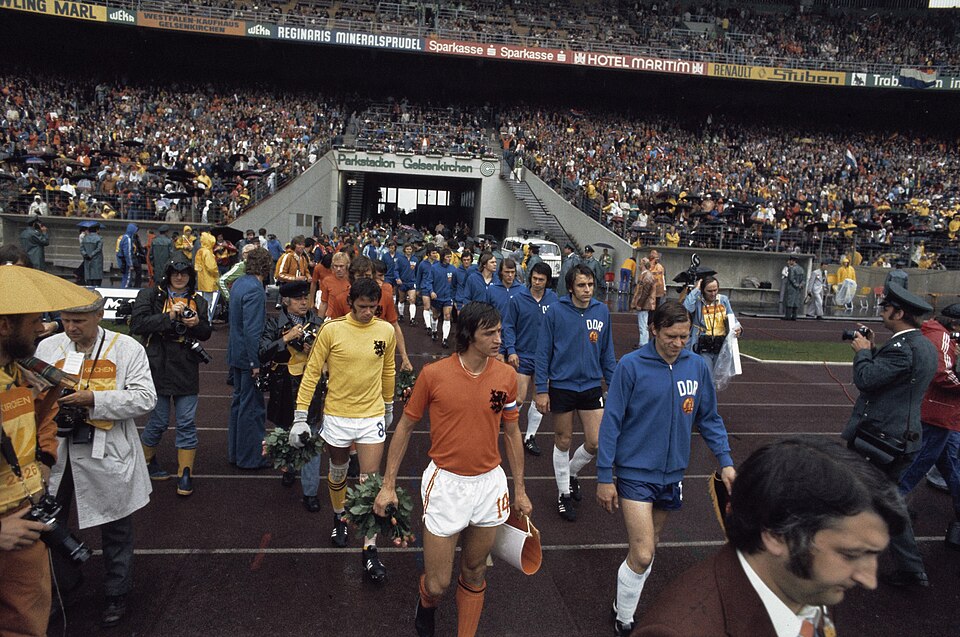
When sport, identity, and design come together
Every four years, the World Cup gives us unforgettable moments.
A goal. A celebration. A photograph that becomes part of sporting history.
Yet long after the final whistle has blown and the trophies have been lifted, another thing remains in memory: the kits.
Some World Cup kits transcend sport. They become symbols of a generation, a nation, or an era. They appear in photographs, documentaries, and museum exhibitions. Decades later, people still recognize them instantly.
The greatest football kits are more than uniforms. They are pieces of design history.
Brazil, 1970
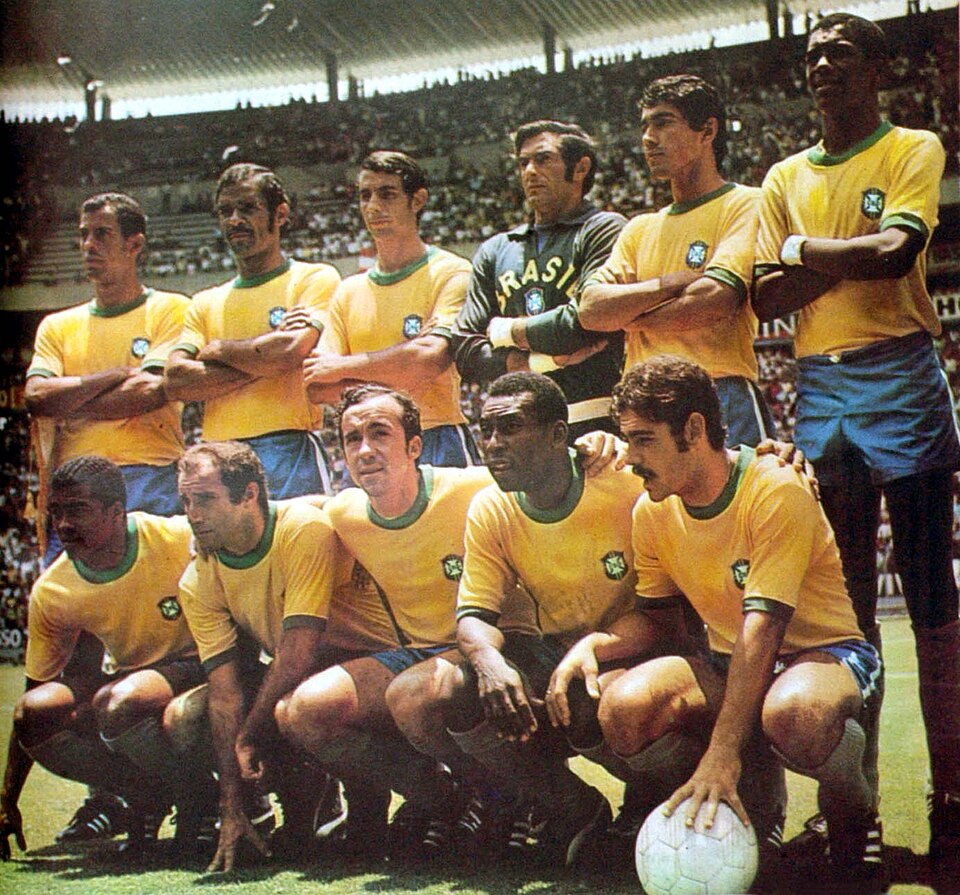
If there is a single kit that embodies the spirit of the World Cup, it is Brazil’s yellow shirt from 1970.
The combination is deceptively simple: vibrant yellow, green trim, blue shorts, and white socks. Yet together these colors created one of the most recognizable sporting identities ever conceived.
The image of Pelé lifting the trophy in Mexico has become inseparable from the kit itself. The shirt represented more than a football team. It came to symbolize creativity, joy, and the beautiful game.
More than fifty years later, it remains the standard against which all World Cup kits are measured.
Netherlands, 1974
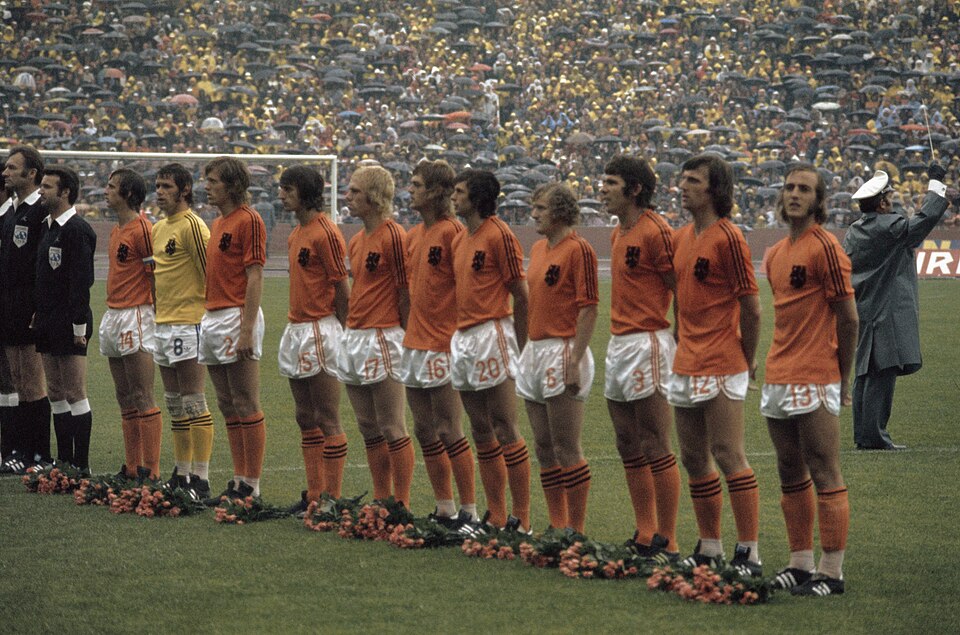
Some designs achieve greatness through simplicity.
The Netherlands arrived at the 1974 World Cup wearing a bold shade of orange unlike anything else on the tournament stage.
The color was impossible to ignore.
Associated with Dutch national identity and the House of Orange, the shirt transformed a national symbol into a visual statement recognized around the world.
Even for those too young to remember the tournament, the orange shirt remains instantly identifiable.
Few national teams have become so closely associated with a color.
Italy, 1982
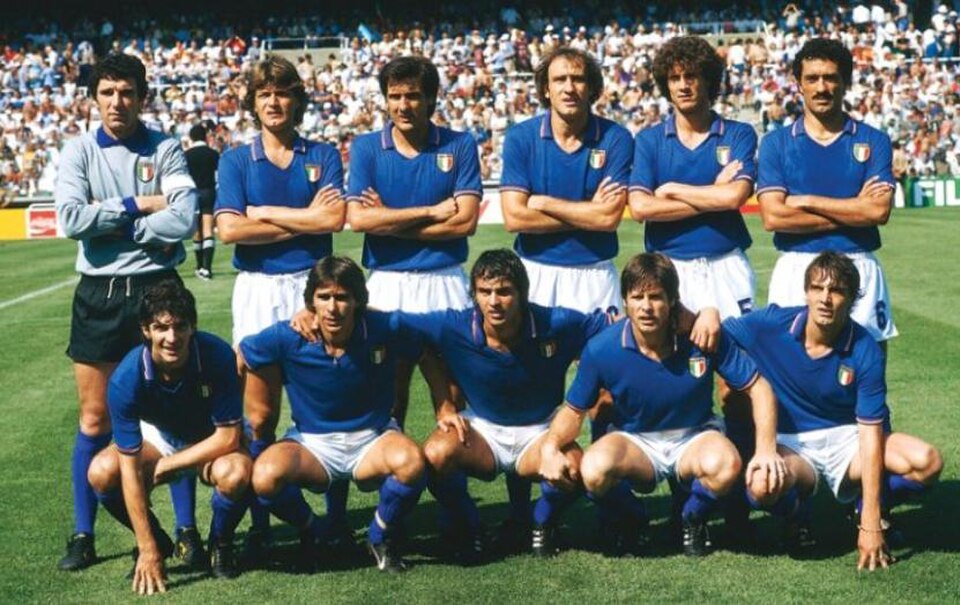
If Brazil’s kit was exuberant and the Netherlands’ was bold, Italy’s was elegant.
The deep azzurro blue of the Italian shirt carried a quiet sophistication that has defined the nation’s football identity for generations.
The design avoided unnecessary embellishment. It relied instead on proportion, color, and restraint.
Perhaps that is why it continues to feel timeless.
The finest designs often resist trends. Italy’s 1982 kit remains as refined today as it was on the night the team lifted the trophy in Madrid.
Argentina, 1986
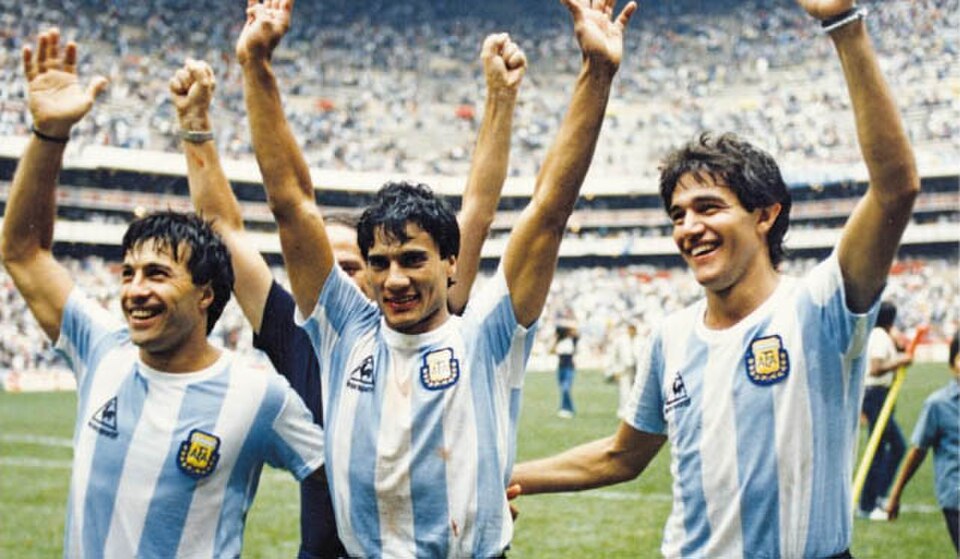
Few football shirts are as immediately recognizable as Argentina’s sky-blue and white stripes.
The design is remarkably simple. There are no elaborate patterns or dramatic embellishments. Instead, it relies on color, proportion, and tradition.
The vertical stripes draw directly from the national flag, creating a visual identity that feels both distinctive and enduring.
Like the greatest designs, the shirt succeeds because it never tries too hard. Decades after the tournament, it remains one of football’s most elegant and recognizable kits.
Colombia, 1990
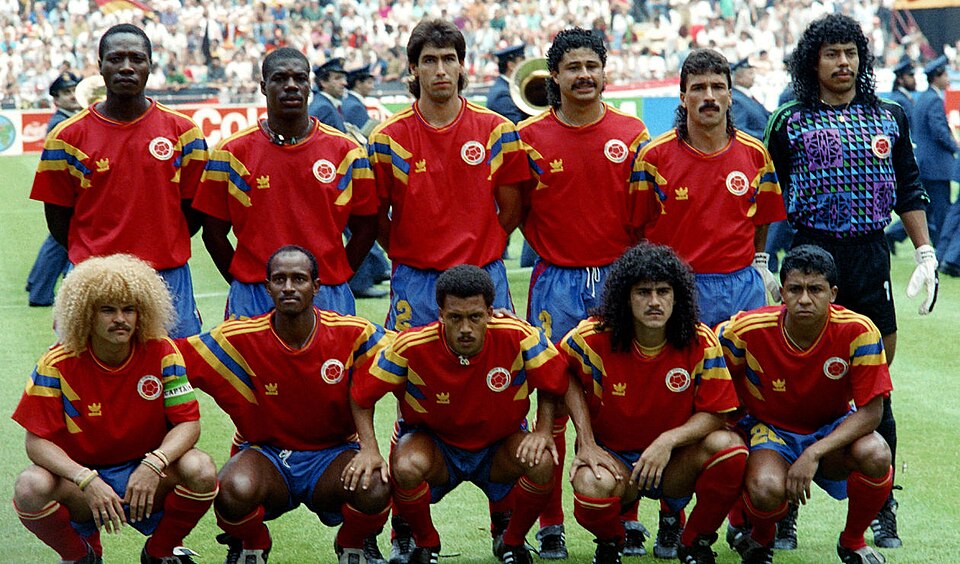
Among the many memorable shirts of the 1990 World Cup, few were as distinctive as Colombia’s away kit.
Rather than relying on the familiar yellow associated with Colombian football, the design embraced a bold red base crossed by a striking yellow diagonal sash. Paired with blue shorts, the combination drew directly from the colours of the Colombian flag while creating a silhouette unlike any other team at the tournament.
What makes the kit remarkable is its confidence. The diagonal stripe introduces movement and visual rhythm, transforming a simple football shirt into a strong graphic statement. Decades later, the design still feels fresh—proof that originality and national identity can coexist without sacrificing elegance.
It remains one of the most distinctive World Cup kits of its era and a reminder that some of football’s most beautiful designs are also its most daring.
More Than Uniforms
The most beautiful World Cup kits endure because they become attached to moments larger than themselves.
They are remembered in photographs, in highlight reels, and in the collective memory of generations who watched the tournament unfold. Long after the final scores have been forgotten, the colors remain.
Brazil’s yellow. The Netherlands’ orange. Italy’s blue. Argentina’s stripes. Colombia’s bold diagonal sash.
Each tells a story about a nation and a moment in time.
The greatest football shirts are more than sporting uniforms. They are symbols of identity, expressions of design, and artifacts of cultural history.
Perhaps that is why they continue to captivate us decades later.
Long after the tournament ends, it is often the image that remains.