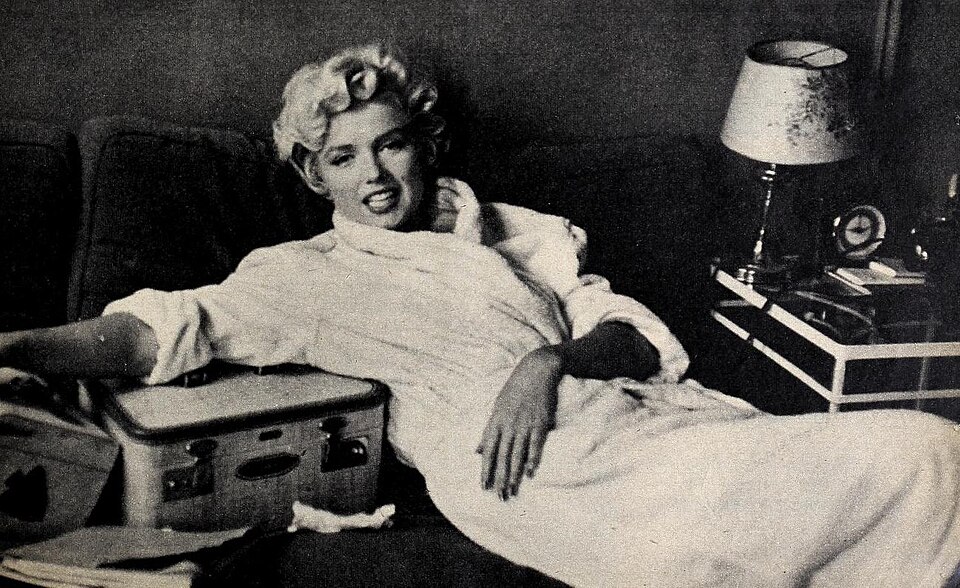
A century after her birth, Marilyn Monroe remains strangely impossible to leave behind.
Her image continues to circulate with the vitality of someone contemporary rather than historical. She appears endlessly across Pinterest boards curated around old Hollywood glamour, hyper-femininity, and nostalgic luxury. Her photographs still dominate fashion moodboards. Video essays discussing her life continue to attract millions of viewers on YouTube, while podcasts and documentaries repeatedly attempt to reinterpret the woman behind the image. Few cultural figures from the twentieth century remain so visually alive.
Marilyn Monroe did not simply become famous. She became symbolic.
Part of her endurance lies in the way she transformed femininity into something culturally powerful. For decades, Marilyn was reduced to the role of a sex symbol — blonde hair, red lips, soft voice, satin dresses. Yet reducing her legacy to beauty alone ignores the peculiar influence she continues to hold over women today. Marilyn represented a form of femininity that was unapologetically soft while still commanding attention. In a world that often associated power with hardness, she managed to make softness unforgettable.
Even now, traces of Marilyn can still be found in contemporary beauty culture. The carefully styled blonde hair, the sensual silhouettes, the breathy glamour, the performance of softness — all continue to shape modern aesthetics online. Entire digital cultures built around “coquette” femininity and old Hollywood nostalgia echo visual elements Marilyn helped immortalize decades ago.
What made her powerful was not only her beauty, but her understanding of visibility itself.
Marilyn understood that femininity could function as presence. She entered rooms delicately yet became impossible to ignore. She cultivated softness without disappearing into passivity. There was something paradoxical about her public image: vulnerable yet magnetic, fragile yet culturally dominant. She transformed glamour into a form of cultural influence long before the modern language of personal branding existed.
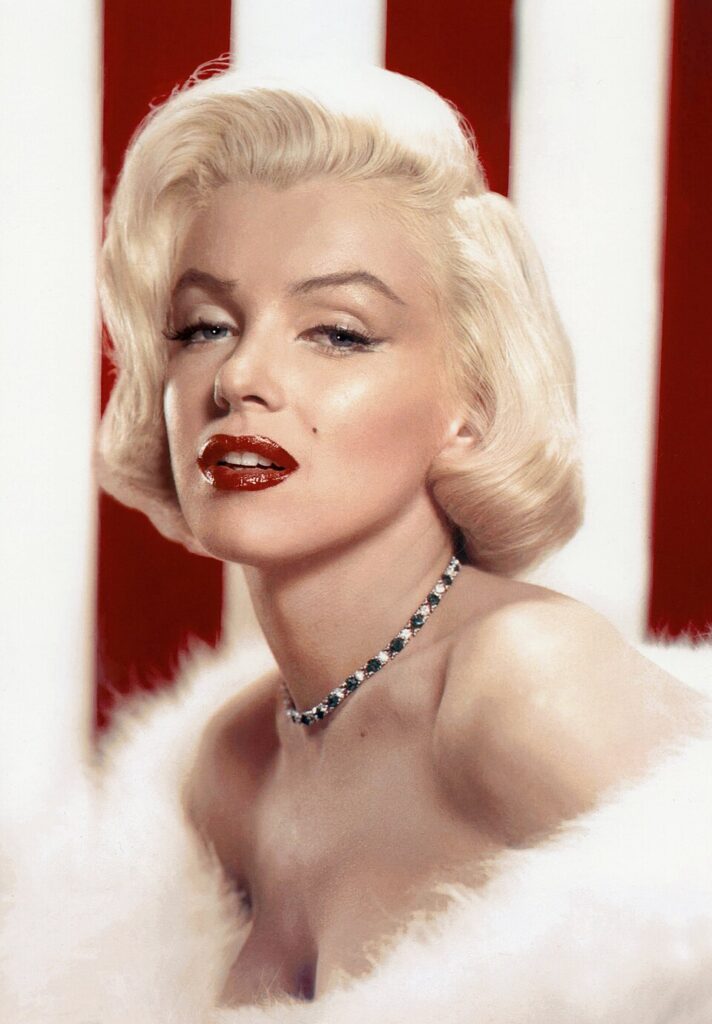
Her influence extended beyond cinema and photography into fashion and luxury culture itself. Perhaps the most famous example remains her association with Chanel No. 5. When Marilyn casually revealed in an interview that she wore nothing to bed except a few drops of the perfume, she transformed the fragrance into mythology. It was no longer simply a perfume; it became attached to the fantasy of Marilyn herself — sensual, elegant, intimate, untouchable. Decades later, Chanel No. 5 remains inseparable from her image.
Very few women become cultural shorthand. Marilyn Monroe did.
A hundred years later, she still represents an entire visual language: old flash photography, satin dresses, platinum curls, feminine performance, beauty touched by melancholy. She survives not only because she was photographed, but because culture continues to project meaning onto her image.
Perhaps that is why Marilyn Monroe still feels contemporary. She belonged to the beginning of celebrity culture as we now understand it — a world where women are endlessly observed, endlessly reproduced, and transformed into symbols larger than themselves.
And yet, despite all the reproductions of her image, Marilyn Monroe remains oddly elusive. The world still looks at her, still studies her, still reconstructs her.
A century later, the fascination has not disappeared.
It has simply learned new ways to repeat itself.